The College of Physical and Mathematical Sciences invites you to indulge your curiosity and explore today’s exciting frontiers of science. Learn something new about the latest in cutting-edge NC State research.
Physics Department Barbecue The Physics Department will celebrate its move into Riddick Hall, honor its past and toast its future with a catered barbecue. Register now to be a part of the fun and fellowship!
Saturday, October 13
Riddick Hall
10:30 am - Noon
Rededication & Tours of Riddick Hall Join us as we rededicate the new home of the Physics Department. Then, explore cutting-edge science in new, state-of-the-art laboratory facilities. Faculty and graduate students will discuss lasers, nano-windmills and even DNA. A poster session will illustrate other fascinating research. Parking will be available on campus.
Noon
Lunch on your own Local eatery information will be provided.
Marye Anne Fox Undergraduate Science Teaching Laboratory, North Campus
1:30pm - 2:00pm
Scope Academy Registration
Afternoon classes will be held in Fox Laboratory, located near the intersection of Dan Allen Drive and Yarbrough Road. Parking is available in the Dan Allen Parking Deck.
2:00pm
Welcome Remarks - Daniel L. Solomon, Dean
2:30pm - 4:30pm
Scope Academy (see topic list below)
Engage your brain in intriguing discussions on today’s most thoughtprovoking scientific topics, led by our outstanding faculty. Hear the latest about tsunamis, energy options, water quality and quantity, supernovae explosions and more! Pick your favorite topics from the list on the next panel, and we’ll develop a class schedule you can pick up at registration. All are suitable for high-school students. Younger children would enjoy class #9. Session 1: 2:30–3:15 pm; Session 2: 3:30–4:15 pm
4:30pm - 6:00pm
Preparation / travel time before evening events
NC Museum of Natural Sciences, 11 West Jones Street
6:00pm
Scope Lecture and Reception Registration and Silent Auction Preview
Parking is available on the street and in a public pay lot just east of the museum on Jones. Business casual attire.
6:30pm
Scope Lecture
Keynote speaker Daniel G. Nocera of MIT will discuss the vital role that the physical and mathematical sciences must play in addressing the world’s increasing need for energy.
7:30 - 10pm
Post-Lecture Reception and Silent Auction
Enjoy heavy hors d’ouerves and conversation with friends old and new. A silent auction will feature a selection of items available for bid, with proceeds to benefit the scholarship programs of the College.
Scope Academy Topics
You may attend two sessions. Please choose three topics and list them on your registration form in order of preference. We will develop a schedule based on your choices and classroom size. You will pick up your schedule on Saturday.
1. Tsunami! -
Learn about these powerful waves, and North Carolina's risk for them. -- Ernie Knowles, MEAS
2.
What a tangled web we weave!
-
The new science of networks tells us how small worlds lead to big outbreaks of disease, and how understanding the spread of gossip can help us fight the spread of bird flu.
-- Alun Lloyd, Mathematics
3.
New discoveries in astronomy
-
Explore the latest discoveries about our fascinating universe, including supernovae explosions. -- John Blondin, Physics
4.
North Carolina's water challenges: quality and quantity
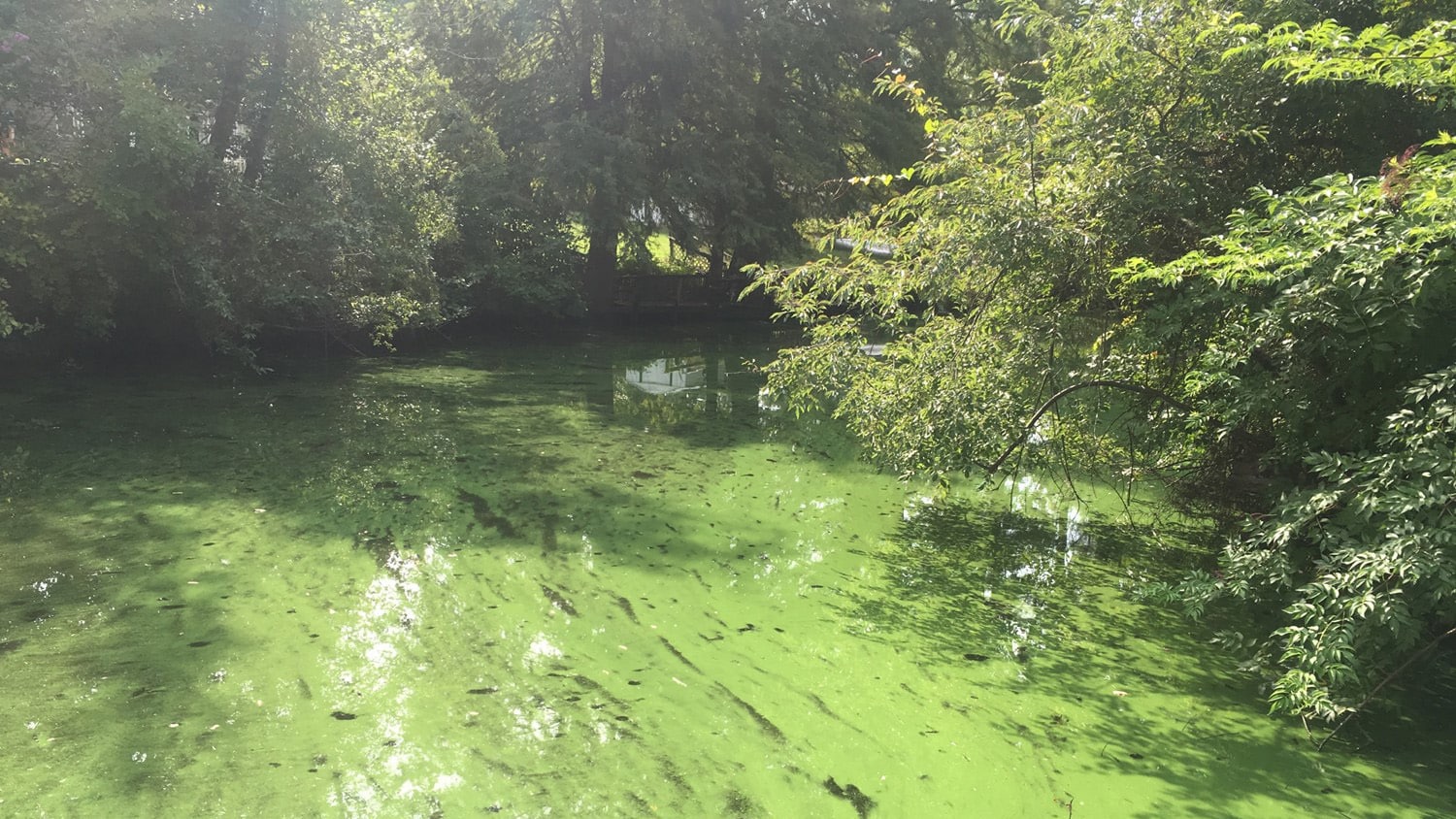
- Discuss the present and future outlook for fresh water resources in our state, and how it affects all of us. -- John Fountain and Ryan Boyles, MEAS
5.
Messages from Antarctica
-
This far-away frozen continent and the creatures that live there can teach us important lessons about the rest of our world, and our changing climate. -- Dave DeMaster, MEAS
6.
Energy today and tomorrow
-
Nuclear, coal, solar, wind, hydrogen? Examine U.S. and N.C. options for meeting our growing appetite for energy. -- Chris Gould, Physics and Paul Maggard, Chemistry
7.
How much does Big Brother really know about you?
-
Find out how data mining can reveal a lot about you … even from your grocery list. -- Dave Dickey, Statistics
8.
The science class of the future
-
Participate in an innovative, hands-on NC State teaching format that is changing how science is taught in universities across the country. -- Maria Oliver-Hoyo, Chemistry
9.
Countertop chemistry
- Items from your cupboards can be used for fun and exciting chemistry experiments. -- Sharon Schulze, The Science House
10.
Secret statistics
-
'Doh! What's Homer Simpson doing in my statistics database? See a demonstration of a new teaching technique that offers a visual reward for accurate work. -- Len Stefanski, Statistics
Powering the Planet: The Challenge for Science in the 21st Century Scope Lecture, Saturday, October 13 Daniel G. Nocera, MIT
With the high price of gasoline and growing concerns about environmental impacts, everyone’s concerned about energy. Conservation is great … but can it really make a difference? What kind of new, cleaner technologies must be developed to feed the world’s ever-increasing appetite for energy? And how will we achieve new sources of power before we, or other nations, build more fossil fuel-burning power plants?
This year’s Scope Lecture will be presented by Professor Daniel G. Nocera of the Massachusetts Institute of Technology (MIT). He will speak on the vital role that physical and mathematical scientists must play in answering the great challenge of meeting humanity’s energy needs.
As MIT’s W. M. Keck Professor of Energy, Nocera has appeared in numerous publications and on an Emmy Award-winning episode of the prestigious science program, NOVA scienceNow.
Nocera believes that to solve our energy challenges, scientists must look to the sun, which in one day bathes the planet with enough power to satisfy society’s energy needs for 30 years.
Widely recognized as a leading figure in alternative energy research, Nocera studies the basic mechanisms of energy conversion in biology and chemistry. Specifically, he seeks to use sunlight to harvest hydrogen from water—hydrogen that can then be used for fuel cells. His research shows great promise— he has already produced hydrogen gas using solar energy. Now he must retrieve the oxygen from the water and then recombine it with the hydrogen to form water again, completing the cycle that will make hydrogen a truly renewable fuel.
He received his BS in 1979 from Rutgers University where he was a Henry Rutgers Scholar. He pursued his MS and PhD at the California Institute of Technology. After earning his doctorate in 1984, he worked at Michigan State University for 13 years before joining MIT in 1997.
Housing
We are holding a block of rooms for $79 until Sept. 28 at the Holiday Inn-Brownstone at 1707 Hillsborough Street (919-828-0811 or 800-331-7919), $79 until Sept. 28 at the newly renovated Velvet Cloak Inn at 1505 Hillsborough St. (919-828-0333), and $99 until Sept. 19 at the Sheraton Raleigh Hotel at 421 S. Salisbury St. (800-325-3535). Just mention "PAMS Alumni & Friends Weekend" when making your reservation.
Registration
You may register online via secure form or complete the registration form in the mailed brochure; keep the rest of the brochure for reference. If you have questions or need more forms, call PAMS Development and College Relations at 919-515-3462.
If you have questions or need more information, please contact the PAMS Office of Development and College Relations at 919-515-3462 or Michelle Duggins at cmduggin@ncsu.edu.
Sponsored by the NCSU Physical and Mathematical Sciences Foundation.